System Design
Security Features
Secret Storage
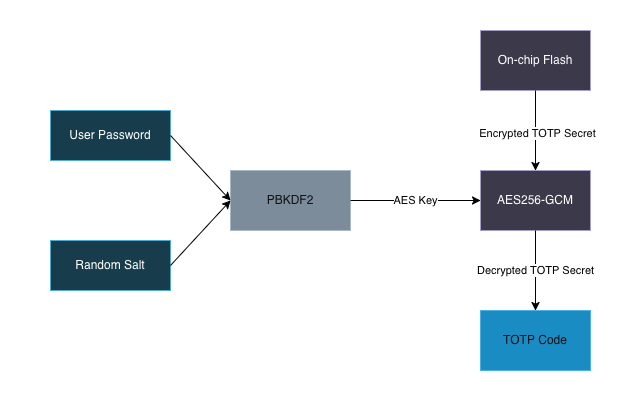
- TOTP secrets are encrypted at rest using AES-256-GCM, ensuring data confidentiality
- Encryption keys derived from vault password using Argon2id, device has no knowledge of decryption keys without vault password
- The keys are never stored on the device (ie. the device cannot decrypt any secrets without the user providing the vault password)
- Encrypted TOTP secrets are stored in NVS (flash) on the same die as the microcontroller, making it difficult to sniff/extract them
- Secrets are zeroed from memory immediately after use
System Firmware
- ESP32-C3 firmware has secure boot enabled with RSA 3072 signature verification, ensuring only trusted firmware can run
- Firmware is encrypted using hardware-accelerated AES, providing an additional layer of security and mitigating TOCTOU attacks on secure boot
- Firmware is written in Rust with minimal
unsaferegions - Device can be attested with a challenge to prove itself
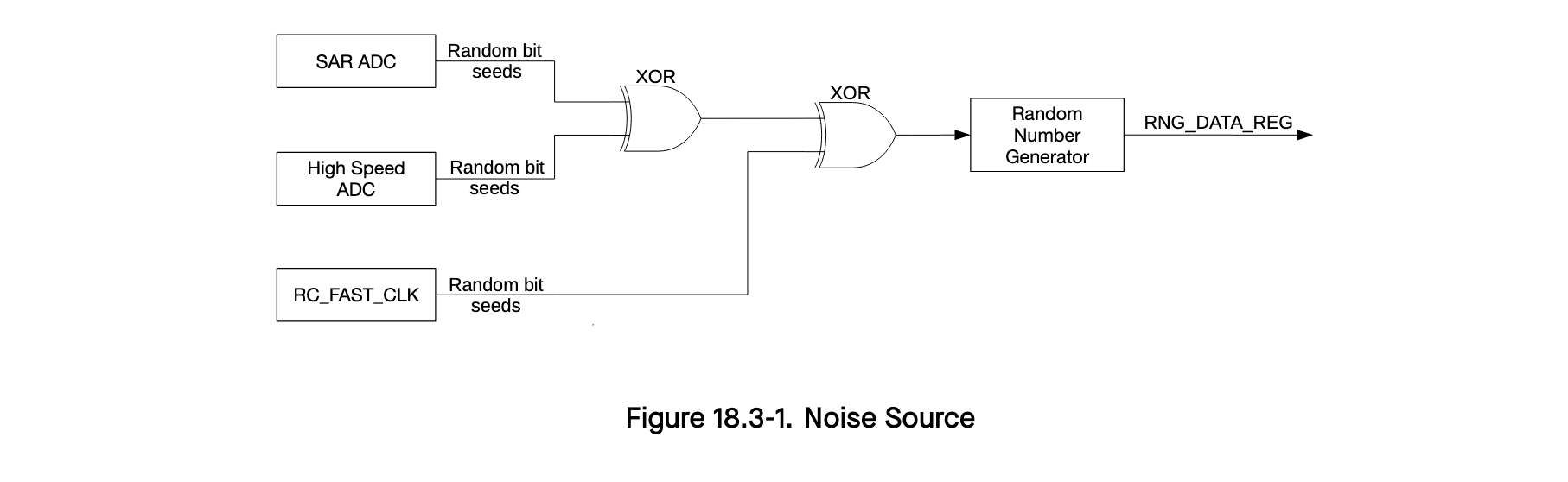
- ESP32-C3 hardware random number generator is used for cryptographic operations
Hardware Design
- TOTP secrets are encrypted and stored in on-chip flash memory, substantially complicating attacks to dump or snoop secrets
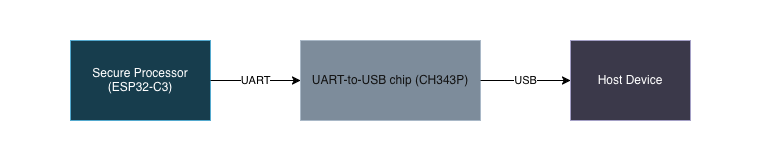
-
USB interface is delegated to a separate chip (CH343P) from the main microcontroller (ESP32-C3) in order to isolate any USB-level exploits from the main processor
-
JTAG interfaces are disabled and eFuses locked down
Security Limitations
- Communication between the
ESP32 <-> USB/UART Chip <-> Hostis unencrypted. After the vault has been unlocked, it is possible for an attacker to sniff these buses for plain-text TOTP codes and TOTP secrets (but only if the sniffing occurs while adding a new credential). It is impossible to extract a TOTP secret once it is stored.